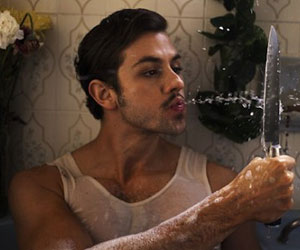
 The Criminals is the latest indie production to hit the intimate stage at The Old 505 Theatre, in the beating heart of Sydney. If you're a student of drama, Latin American drama in particular, you might know it as La Noche de los Asesinos. Yes, even the word assassins sounds romantic, in Spanish.
It was written by Jose Triana, adapted by Adrian Mitchell and translated by Pablo Armando Fernandez and Michael Kustow. And if you're a very serious student of Latin American theatre, you'll know there are two versions of Triana's play; the first penned in 1957, in the years leading up to the Cuban revolution of 1959, then rewritten in 1965.
At the time of the first, Triana was in Spain and his play was allegorical: three children railing against the cruelty of their parents, an obvious parallel with the move against Batista. The original had many characters, but was never produced. The later version didn't entirely dispense with the cast of characters, but took them offstage and into the imaginations of the three left on. Clearly, this changed the mood and shape of the work immensely. Again, it was metaphorical; but rather than being a loyal pledge of support to the revolutionaries from afar, Triana now returned to his homeland post-revolution was, like so many others, trying to come to terms with the aftermath and what it meant. Hence the deliberate surrealism.
Ironically, just as Triana had joined hands with the revolutionaries in the first version, the latter one, particularly once it attracted acclaim outside Cuba, was seen to be cynical about the new father figure, Fidel. The peer pressure finally saw Triana move to France. It's an historical context that's probably essential to full appreciation of the piece.
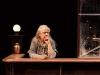
It's hard to transcend one's childhood. And one's parents. All the moreso if one's parents were abusive. One way of dealing with the legacy is to fantasise about murdering them in cold blood. Lalo, Cuca and Beba do just this, in the dingy attic or basement of the family home, replaying, day after day, details of their systematic, soul-destroying, spirit-breaking oppression and fantasising about absolution of their pain. The most chilling question being, are they using the game to sublimate their incendiary anger and resentment, or are they preparing a recipe to enact the crime? Of course, there's every chance they've already committed the heinous act.
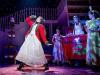
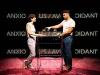
David Valencia, Rosanna Easton and Emily Morrison are all outstanding in these roles (as well as the many others they play, impersonating friends and relates unseen), under the direction of James Dalton, with exceptional resourcefulness and attention to detail having been observed by set designers Emma Kingsbury & Dylan Tonkin, not to mention in the tattered, orphan-like wardrobe by Jonathan Hindmarsh. Both echo the decay described, albeit in relation to the siblings' parents' real or imagined corpses.
Having begun with Lalo's loud proclamation of parricide, an argument ensues between him and his sister, Cuca, habitually cleaning, preening and tidying. That's what their parents' would've wanted and that's precisely why Lalo is dead against any such attempt to restore a semblance of order; after all, it's that very facade which has masked the emotional chaos resulting from their parents' unrelenting harassment. Indeed, Lalo's compulsion is, understandably, antithetical: the ashtray should be relegated to the chair; the vase to the floor. He's seeking, it seems, a kind of magical solution and prefers to believe that, by reversing the polarity, as it were, pushing the chaos to be manifest, they will suddenly be unburdened and rendered safe, free and clear. The reorientation of objects certainly permits and enables all three to reinvent themselves and their environment: now they're in charge; if anything, they've become the merciless oppressors they were so determined to escape. You can see why Triana was run out of town.
As extreme, exaggerated and histrionic as the pitch of the drama is, as much as it's intended to reference a macro political reality, not just a familial one, the play remains a powerful instrument for debating something quite commonplace in the interpersonal realm still prevalent today. Parents, frustrated with their own relationship with themselves and each other, consumed by the act of conspicuous consumption and status, unwittingly exorcise their angst against their children, controlling and branding them, playing them like small, stringed instruments, striking all the wrong chords.
The big-picture angle still pertains, too. Even if we take one example, the conflict in Syria, we don't have to look far past the corporate media and first world propaganda to see the murkiness. Yes, the government represents an undesirable regime. But what and who will replace it? What do the splintered forces of opposition stand for? Can they come together to form a cohesive alternative? Are they committed to the common good, or self-serving impostors?
Visceral and energised though it may be, La Noche isn't the kind of play that necessarily shows all its cards right away. (If you're looking for instant gratification, go see Legally Blonde.) But with reflection and consideration, it amply rewards the faithful, dedicated theatre-goer. It's no wonder The Criminals, or The Murderers, call it what you will, is regarded as one of the most significant Latin-American plays of the last century. A classic. And you'd be hard-pressed to find a more intense, provocative, or confronting production.
~
The Old 505 Theatre presents
The Criminals
Written by Jose Triana, adapted by Adrian Mitchell, translated by Pablo Armando Fernandez and Michael Kustow
Venue: The Old 505 Theatre
Dates: 4 October - 21 October, 2012
Bookings: venue505.com